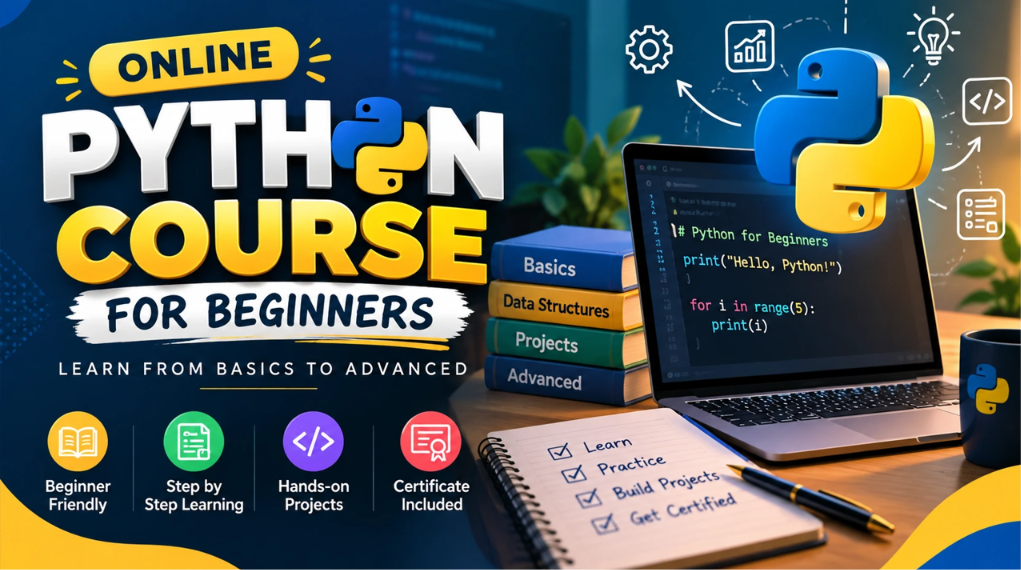

Online Python Course for Beginners: Master Coding from Scratch
Learning to program can feel overwhelming when you face complex syntax and strict compiler errors. Python solves this problem. Designed with readable, English-like syntax, Python allows high school graduates, college students, and aspiring developers to learn programming logic without getting stuck in messy code mechanics.
Whether you want to build web applications, automate repetitive tasks, or enter artificial intelligence, starting with an online python course for beginners is the most effective way to build a solid technical foundation.
Why Learn Python First?
Python is consistently rated among the most popular programming languages globally.
Key Advantages for Beginners
Readability: Python code looks almost like plain English, reducing cognitive load for new learners.
Versatility: You can write automation scripts, build full-stack web platforms, analyze datasets, or train machine learning models using the same language.
Extensive Ecosystem: Thousands of pre-built packages (libraries) allow you to add complex functionality without writing everything from scratch.
Core Modules in a Beginner Python Course
A structured best python course for beginners guides you step-by-step from zero experience to writing functional programs. Here is what a comprehensive syllabus looks like:
| Module | Core Topics Covered | Practical Project Outcome |
| 1. Python Setup & Basics | Installing Python, VS Code, Variables, Data Types | Command-line calculator |
| 2. Logic & Control Flow | If-else statements, For loops, While loops | Interactive text quiz game |
| 3. Data Structures | Lists, Dictionaries, Sets, Tuples | Student grade management system |
| 4. Modular Code | Functions, Scope, Modules, Packages | Automated unit conversion tool |
| 5. Object-Oriented Programming | Classes, Objects, Inheritance, Methods | Digital banking account simulator |
| 6. Working with Data & APIs | File I/O, JSON parsing, REST APIs | Real-time weather checker app |
What to Look for in an Online Python Course
When choosing a beginner python certification or self-paced platform, prioritize practical execution over passive watching. Look for these essential features:
1. Hands-On Coding Environments
Reading code is not the same as writing code. Choose platforms that provide interactive coding terminals directly in the browser or step-by-step guides for configuring a local environment like VS Code or PyCharm.
2. Project-Based Curriculum
Tutorial hell happens when you watch endless videos without writing custom code. Look for courses that require you to build real-world tools, such as:
Automated file sorters
Simple web scrapers using
Interactive REST API consumers
3. Clear Instruction on Debugging
Writing code means fixing errors. A quality course teaches you how to read Python tracebacks, handle exceptions using try-except blocks, and debug syntax issues independently.
Common Beginner Pitfalls and How to Avoid Them
Learning to code requires a shift in how you structure logic. Avoid these three common mistakes when starting your journey:
Memorizing Code Instead of Patterns: Focus on understanding why a loop or conditional logic works rather than trying to memorize exact syntax line-by-line.
Skipping Core Concepts: Do not jump into complex AI tools or web frameworks before mastering basic data structures like dictionaries and lists.
Copy-Pasting Solutions: When code throws an error, read the terminal prompt before searching for answers online. Understanding the specific error message builds problem-solving skills.
Career Opportunities After Master Class Fundamentals
Completing an online python course for beginners opens up several specialized learning paths depending on your career goals:
Web Development: Learn web frameworks such as FastAPI or Django to build backend systems and APIs.
Data Analytics: Master libraries like pandas and NumPy to clean, transform, and analyze datasets.
Automation & Scripting: Write scripts that handle file management, web scraping, and repetitive workplace tasks automatically.
Conclusion
Starting an online python course for beginners is one of the most practical investments you can make in your technical skills. By focusing on foundational logic, practicing daily, and building real projects, you can transition from zero coding experience to building functional applications.
Start by picking a structured course, setting up your development environment, and writing your first lines of code today.
Next Steps
Ready to build your first program? Download Python from the official Python Software Foundation site, set up Visual Studio Code, and build a basic command-line tool to practice your logic.


