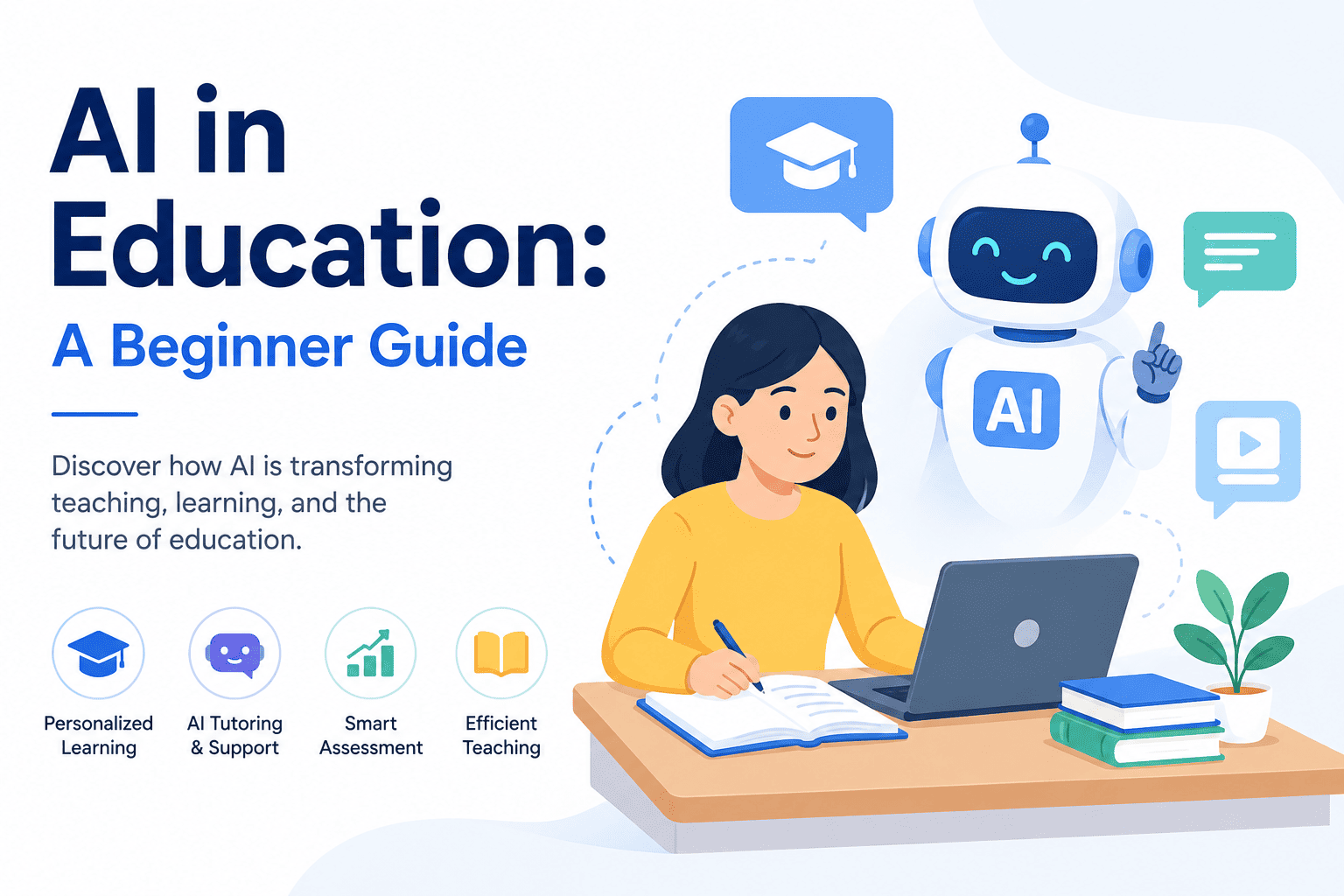

AI in Education: A Beginner Guide
Artificial Intelligence (AI) is rapidly transforming industries worldwide, and education is no exception. From personalized learning experiences and intelligent tutoring systems to automated grading and administrative support, AI is revolutionizing how students learn and how educators teach. As schools, universities, and online learning platforms increasingly adopt AI-powered technologies, understanding the fundamentals of AI in education has become essential for students, teachers, parents, and policymakers alike.
This beginner's guide explores what AI in education means, how it works, its benefits and challenges, and the future opportunities it presents for learners and educators.
What Is AI in Education?
AI in education refers to the use of artificial intelligence technologies to improve teaching, learning, assessment, and educational administration. These systems use machine learning, natural language processing (NLP), computer vision, and data analytics to understand user behavior, provide personalized recommendations, and automate repetitive tasks.
Unlike traditional educational software, AI systems can learn from data, adapt to individual learning needs, and continuously improve their performance over time.
Why AI Matters in Education
Traditional education often follows a one-size-fits-all approach, where every student receives the same content regardless of their learning style, strengths, or weaknesses. AI helps overcome these limitations by creating personalized learning experiences tailored to each learner's needs.
Some key reasons AI is becoming important in education include:
- Personalized learning paths for individual students.
- Instant feedback and assessment.
- Improved accessibility for diverse learners.
- Reduced administrative workload for teachers.
- Enhanced student engagement and motivation.
- Data-driven decision-making for educators and institutions.
How AI Works in Education
AI systems collect and analyze large amounts of educational data, including student performance, learning behavior, engagement patterns, and assessment results. Using machine learning algorithms, these systems identify trends and provide insights that help optimize the learning process.
A typical AI-powered educational workflow includes:
- Collect student learning data.
- Analyze performance and behavior patterns.
- Identify strengths and learning gaps.
- Recommend personalized content and activities.
- Track progress and adapt learning experiences.
- Provide ongoing feedback to students and teachers.
Key Applications of AI in Education
1. Personalized Learning
AI-powered learning platforms can tailor educational content to individual students based on their performance, learning speed, and preferences. Instead of following a fixed curriculum, learners receive customized recommendations that help them progress more effectively.
Benefits include:
- Adaptive lesson plans.
- Customized practice exercises.
- Personalized learning recommendations.
- Improved learning outcomes.
2. Intelligent Tutoring Systems
AI tutors act as virtual teaching assistants, providing students with guidance, explanations, and support outside traditional classroom hours. These systems can answer questions, explain concepts, and offer additional resources based on learner needs.
Examples include:
- AI-powered chatbots.
- Virtual teaching assistants.
- Interactive learning companions.
- Homework support systems.
3. Automated Grading and Assessment
Teachers spend significant time grading assignments and assessments. AI can automate many evaluation tasks, allowing educators to focus more on teaching and student engagement.
Common applications include:
- Multiple-choice grading.
- Essay evaluation assistance.
- Assignment feedback generation.
- Performance analytics.
4. Smart Content Creation
AI can assist educators in creating educational materials, quizzes, lesson plans, presentations, and learning resources. This reduces preparation time and improves content quality.
Examples include:
- Automatic quiz generation.
- Lesson plan recommendations.
- Educational content summarization.
- Interactive learning material creation.
5. Learning Analytics
Educational institutions generate vast amounts of data. AI-powered analytics help identify patterns, predict student outcomes, and support data-driven decision-making.
Learning analytics can help:
- Identify at-risk students.
- Improve curriculum effectiveness.
- Track student engagement.
- Support academic planning.
Benefits of AI in Education
| Benefit | Description |
|---|---|
| Personalization | Learning experiences adapt to individual needs. |
| Efficiency | Automates repetitive administrative tasks. |
| Accessibility | Supports students with diverse learning needs. |
| Scalability | Provides educational support to large audiences. |
| Continuous Feedback | Offers real-time performance insights. |
| Improved Outcomes | Helps students learn more effectively. |
Challenges of AI in Education
Despite its benefits, AI adoption in education also presents challenges that educators and institutions must address responsibly.
Data Privacy and Security
AI systems often rely on student data, raising concerns about privacy, consent, and data protection.
Bias and Fairness
AI models can unintentionally inherit biases from training data, potentially affecting educational outcomes and recommendations.
Technology Access
Not all students have equal access to devices, internet connectivity, or AI-powered learning platforms.
Teacher Training
Educators need proper training to effectively integrate AI tools into their teaching practices.
Real-World Examples of AI in Education
- AI-powered language learning applications.
- Adaptive online learning platforms.
- Virtual tutoring assistants.
- Automated assessment systems.
- Learning recommendation engines.
- Student performance prediction tools.
The Future of AI in Education
The future of education will likely involve deeper collaboration between humans and AI. Rather than replacing teachers, AI will act as an intelligent assistant that helps educators provide more personalized, efficient, and engaging learning experiences.
Emerging trends include:
- AI-powered personalized learning ecosystems.
- Advanced virtual tutors and mentors.
- Immersive AI-driven learning environments.
- Real-time student support systems.
- Predictive educational analytics.
- Lifelong learning assistants.
Best Practices for Implementing AI in Education
- Prioritize student privacy and data protection.
- Use AI as a support tool rather than a replacement for educators.
- Continuously monitor AI system performance.
- Provide teacher training and professional development.
- Ensure equitable access to AI-powered educational resources.
Conclusion
Artificial Intelligence is transforming education by making learning more personalized, accessible, and effective. From intelligent tutoring systems and adaptive learning platforms to automated assessments and learning analytics, AI offers powerful opportunities to improve educational outcomes for students worldwide.
While challenges such as privacy, fairness, and accessibility must be carefully addressed, the potential benefits of AI in education are significant. By combining the strengths of human educators with intelligent technologies, schools and institutions can create more engaging, inclusive, and effective learning environments for the future.
As AI continues to evolve, understanding its role in education will become increasingly important for students, teachers, parents, and educational leaders alike.


